Search This Website

Showing posts with label INCOME TAX CALCULATER. Show all posts

Thursday, 3 December 2020

There are many types of income tax exemptions on home loans

There are many types of income tax exemptions on home loans


There are many types of income tax exemptions on home loans, millions of rupees can be saved if there is information

Upon payment of principal under section 80C, an income tax deduction of up to Rs 1.5 lakh is available


Under section 24b, tax deduction of up to Rs 2 lakh is available

If you are thinking of buying a home and you are thinking of taking a loan for that, it is very important for you to know about the tax exemption you get on a home loan. You can get tax exemption on your loan under other sections including section 80C and 24 (b). CA Abhay Sharma (Former Chairman Indore Chartered Accountant Branch) is telling you about the tax exemption on home loan.


Section 80C

When taking out a home loan, you have to pay the principal at the beginning. Upon payment of principal under section 80C in any financial year, a deduction of up to Rs 1.5 lakh is available on income tax. In addition, under this section you can claim stamp duty, registration charge and other expenses incurred while purchasing the property for tax benefit. For this you can claim a limit of up to Rs 1.5 lakh in Section 80C. This can be done in the same year in which you have spent.

Section 24 (b)

Interest on home loans is divided into two categories - pre-construction interest and post-construction interest. For the interest paid during the period of completion of construction, under Section 24b of the Income Tax Act, Rs. Up to Rs 2 lakh tax deduction is available. There is no high limit to claim interest deduction on leased property. This deduction can only be claimed from the year in which the building is completed.

Often people take out a home loan for a property under construction and later get possession of it. But home loan repayment starts immediately after taking out a loan. Such persons can claim a tax deduction of up to 5 years (in 5 equal installments) on interest up to 5 years before construction is completed within section 24b. Keep in mind that there is a high limit of up to Rs 2 lakh only under the maximum section 24b, which can be claimed.

Section 80EE

Section 80EE allows homeowners to claim an additional deduction of Rs. 50,000 (Section 24) on the interest on home loan EMI. However, the loan is Rs. 35 lakhs and the value of the property should not exceed 50 lakhs. In addition, a person should not have any other assets registered in his name at the time of loan approval.

આ પણ વાંચો:- વિવિધ બેંન્કોના હાલના વ્યાજદર


Section 80EEA

In last year's budget, an additional tax exemption of Rs 1.5 lakh was announced on interest payments on home loans taken between April 1, 2019 and March 31, 2020. The stamp duty value of the property for tax exemption under section 80EEA should be up to Rs 45 lakh. This discount can only be taken by a first time home buyer. In the Budget 2020 announced a few days ago, the benefit of this section has been increased for one year and now the benefit of tax exemption under this section will be extended till March 31, 2021.

અહીંથી વાંચો ગુજરાતી રિપોર્ટ


Tax deduction on joint home loan

Both the borrowers can take interest deduction of up to Rs 2 lakh per annum under section 24b, while the principal amount can be deducted up to a maximum of Rs 1.5 lakh per annum under section 80C. 

READ ALSO:: SBI YONO ANDROIDE APP

Applying for a joint home loan will enable the borrower to avail various income tax benefits. However, both will be able to take the tax benefit separately only if they also have an owner with the app.

Read More »

Wednesday, 16 January 2019

INCOM TAX CALCULATOR EXCEL FILE 2018- 19

INCOM TAX CALCULATOR EXCEL FILE 2018- 19… CRATE- JAGDISHBHAI .


INCOM TAX CALCULATOR EXCEL FILE 2018- 19… CRATE- JAGDISHBHAI .


INCOM TAX RETURN MATE UPAYOGI EXCEL FILE 2018- 19 … CRATE- JAGDISHBHAI .

Teachers are great sources of knowledge, prosperity and enlightenment to which anyone can be benefited for whole life. They serve as the real light in everyone’s life as they help students to make their ways in the life. They are the God gifted people in everyone’s life who lead us towards success without any selfishness. Really, we can call them as builders of the dazzling future of our nation through education.

Teacher plays very essential role in the field of education who teaches students very nicely to be a person of good moral and behaviour. They make students academically superb and always encourage to do better in the life. They equip students with lots of knowledge, skills and positive attitudes so that students can never feel lost and go ahead. They help students to get sure about their goals of education through clear vision and ideas. Without teachers in the life one cannot grow mentally, socially and intellectually.

A teacher is a good person who takes very important responsibility of shaping up the lives of young ones and impressionable children. They get great feeling, pride and true joy in their life by teaching their students on the right path. They never do any type of partiality between good or bad students instead they always try to bring bad one on the right path through their lots of efforts. A good teacher is someone who spent their whole life in giving quality education to their students. They push all the students to do their best. They make learning process very interesting as well as creative. Teachers try their best to bring all the students on the right track by motivation them positively towards study. Good teachers leave good impression over their students.

They equip students with lots of knowledge, skills and positive attitudes so that students can never feel lost and go ahead. They help students to get sure about their goals of education through clear vision and ideas. Without teachers in the life one cannot grow mentally, socially and intellectually.

They push all the students to do their best. They make learning process very interesting as well as creative. Teachers try their best to bring all the students on the right track by motivation them positively towards study. Good teachers leave good impression over their students.

INCOM TAX RETURN MATE UPAYOGI EXCEL FILE 2018- 19… CRATE- JAGDISHBHAI .

INCOM TAX CALCULATOR EXCEL FILE 2018- 19… CRATE- JAGDISHBHAI .

CLICK HERE TO DOWNLOAD. 

 download   FONT.

Read More »

Income Tax Full Detail Pdf file for F.Y. 2018-19

Income Tax Full Detail Pdf file for F.Y. 2018-19


Income Tax Full Detail Pdf file for F.Y. 2018-19

The income tax slab is a table that shows the threshold limit beyond which a specific tax rate is applicable and various deductions are made as per the applicable rate. To better understand the working methodology of income tax slab, one has to first understand the vital elements based on which tax slabs are fixed.

Income Tax Slab for the Financial Year 2018-2019

As per the union budget of 2018, below are the various slabs according to which income tax is assessed in various categories.

Resident Individuals & Non Resident Indians

      Income Threshold                 Tax rate applicable

Up to ₹ 2,50,000                     NIL


₹ 2,50,000 to ₹ 5,00,000             5%


₹ 5,00,000 to ₹ 10,00,000    20%


Over ₹ 10,00,000                    30%

Major Changes made in Income Tax Slabs FY 2018-2019

This financial year witnessed changes which have undergone quite few alterations in FY 2018-2019. Let’s have a look at the changes upcoming this financial year 2018-2019:

LTCG tax on equity investments: Reintroduction of Long Term Capital Gain Tax on stock market investment is the biggest change to be implemented this financial year.

Standard Deduction: The budget announced a standard deduction of Rs 40,000 for salaried employees, but it also did away with the taxexempt annual transport allowance of Rs 19,200 and medical reimbursement of Rs 15,000. The difference of Rs 5,800 is the reduction in the amount of taxable salary.

Exemption limit for Senior Citizens: The exemption limit on income from interest for those over 60 has been hiked five times from Rs 10,000 to Rs 50,000 per year. All deposits held by senior citizens across both banks and co-operative banks, as well as post offices will be eligible for this exemption.
Hike in Education cess on income tax: The cess on income tax has been increased by 3% to 4%, as a result of which, the effective tax liability of taxpayers in the highest tax bracket will increase to 31.2% from 30%. For the middle income taxpayers, it will go up from 20% at present to 20.8%; and for those in the lowest bracket, liability will increase from 5% to 5.2%.

Income Tax Slab & Rate for FY 2018-19

No tax for individuals with income less than ₹ 2,50,000


0%-5% tax with income ₹ 2.5 lacs to 5 lacs for different age groups


20% tax with income ₹ 5 lacs to 10 lacs


Investments upto ₹ 1.5 lacs under Sec 80C can save ₹ 46,800 in taxes. Invest Now

IMPORTANT LINK::::
DOWNLOAD PDF FROM HER

Read More »

Friday, 27 July 2018

HOW TO FILING ONLINE ITR FOR AY 2018-19


HOW TO FILING ONLINE ITR FOR AY 2018-19

The Central Board of Direct Taxes has notified the new ITR Forms for AY 2018-19 Income Tax Return Filing (for FY 2017-18). In order to make ITR filing easy, some sections of the forms have been rationalized.


The new ITR forms in PDF format have been made available, while the excel utilities (or) Java Utilities for AY 2018-19 will soon be made available on incometaxindia e-filing website.

What is Assessment Year (AY) & Financial Year (FY)?

Financial year (FY) is the year in which you have earned the income. If you are filing a return this year, the financial year will be 2017-18.

For example, if you have had an income between 1st April 2017 and 31 March 2018, then 2017-18 will be referred to as FY. Assessment Year (AY) is the year in which you file returns i.e., 2018-19. The last date to file returns for the financial year 2017-2018 is July 31st 2018 (as of now).

Income Tax Slab Rates for FY 2017-18


The income tax slabs & rates are categorized as below;

Individual resident aged below 60 years.
Senior Citizen (Individual resident who is of the age of 60 years or more but below the age of 80 years at any time  during the previous year) &.
Super Senior Citizen (Individual resident who is of the age of 80 years or more at any time during the previous year).

AY 2018-19 Income Tax Return Filing | New ITR Forms

Below are the important details about new ITR forms;

The requirement of furnishing details of cash deposit made during a specified period as provided in ITR Form for the Assessment Year 2017-18 has been done away with from Assessment Year 2018-19.
NRIs can now provide details of their foreign bank accounts to claim credit or refunds. Earlier, they could only provide details of bank accounts held in India.
However, NRIs will no longer be able to file returns using the simple income tax return (ITR)-1 form, which can now only be used by residents. NRIs will have to use ITR-2, which seeks more information.
GSTIN number now has to be mentioned in ITR-4 filled by businesses and professionals claiming presumptive income. They also have to quote gross receipts as per GST returns.
The partners in firms will now have to file ITR-3 instead of ITR-2.
All the ITR Forms are to be filed electronically. However, where return is furnished in ITR Form-1 (Sahaj) or ITR-4 (Sugam), the following persons have an option to file return in paper form:-
An Individual of the age of 80 years or more at any time during the previous year (or)
An Individual or HUF whose income does not exceed five lakh rupees and who has not claimed any refund in the Return of Income.
FY 2017-18 Income Tax Return Filing | Which ITR form to file?
New ITR 1 (Sahaj) Form For Assessment Year 2018-19
The Central Board of Direct Taxes(CBDT) has notified Income Tax Return Forms (ITR Forms) for the Assessment Year 2018-19. For Assessment Year 2017-18, a one page simplified ITR Form-1 (Sahaj) was notified. This initiative benefited around 3 crore taxpayers, who have filed their return in this simplified Form. For Assessment Year 2018-19 also, a one page simplified ITR Form-1(Sahaj) has been notified.

This form can be used if you have;
Salary or Pension Income
Income from one house property (excluding cases where loss is brought forward from previous years)
No business income / no Capital gains
No asset in foreign country or no income from a source outside India
Agricultural  income which is less than Rs 5,000
Income from other sources like FD/Shares/NSC etc.,
No income from lottery or horse racing.TR Form-1 (Sahaj) can be filed by an individual who is resident other than not ordinarily resident, having income upto Rs 50 lakh and who is receiving income from salary, one house property / other income (interest etc.).

Further, the parts relating to salary and house property have been rationalized and furnishing of basic details of salary (as available in Form 16) and income from house property have been mandated.

New ITR 2 Form for Assessment year 2018-19 :


 ITR2 form can be filed by an Individual or Hindu Undivided Family (HUF). This form can be used if you have;
 Salary or Pension Income
 Income under the head ‘Capital Gains’
 Income from multiple houses
 No business / professional income under any proprietorship
 An asset in foreign country or income from a source outside India
Agricultural income of more than Rs 5,000
Income from lottery or horse racing
If your income is more than Rs 50 Lakh, ITR 2 has a Schedule AL requiring assessees to declare their assets and liabilities at the end of the fiscal.
Click here to download new ITR 2 Form.
New ITR 3 for AY 2018-19 Income tax filing
Since AY 2017-18, the previous ITR 4 form has been re-numbered as ITR 3 form.
New ITR 3 form is for individuals and HUFs having income from a proprietary business or profession (or having income as a partner in a Partnership firm).
This ITR covers all kind of businesses and professions irrespective of any income limit. Assesse can also report his income from salary, multiple house properties, lottery winnings, capital gains, speculative income i.e. horse race in ITR3 together with the Business Income.
Click here to download new ITR 3 Form.
New ITR 4S (Sugam) form for AY 2018-19 / FY 2017-18
This form can be used by individuals who have;
Presumptive income from Business or Profession.
No Capital Gains
Agricultural Income which is less than Rs 5k
No asset in foreign country or no income from a source outside India
Income from one house property
Income from other sources
Click here to download new ITR 4S form.
Important points to consider before filing your ITR :

Before you file your Income Tax returns, check if your Form 26 AS has correct TDS entries. For example: Your employer might have deducted TDS amount for last quarter and deposited the amount on your behalf. Check for this transaction in Form 26 AS. Also, check whether all the investments with TDS have been duly mentioned in your Tax return form also. Any mismatch will lead to a notice from the department.

Do not file your ITR till you get Form-16 (issued by your employer, if salaried) and Form 16A. While Form 16 is for only salary income, Form 16A is applicable for TDS on Income Other than Salary. Form 16A is a statement containing all details of TDS Deducted on all Payments except Salary. For example,  Form 16A is issued by banks when they deduct TDS on interest income earned on your Fixed Deposits / Recurring Deposits.

Form16, Form 16A and Form 26AS documents will come handy while filing your ITR. As discussed above, you have most of the details in your form 16 with which you can easily file your Tax Returns. Cross check your Form 16/16A TDS amounts with Form 26AS and then key in TDS details in ITR accordingly.

Based on Form 16, you can fill ‘Income’ and ‘TDS’ details. By looking at your Form 16 A, you can fill ‘income from other sources’ and ‘TDS’ details in ITR sheet.
Based on Form26 AS, you can cross check the above TDS payments and also fill in details of ‘Advance or self assessment tax’ payments (if any) in your ITR sheet. (Related Article : ‘Understanding your Form 16 & other Tax related forms – Form 16A & Form 26AS‘)
 If you had joined a new company during the financial year then do not forget to declare the income from previous employer in the tax return.

You might have earned interest income on Bank fixed deposits, Bonds, National Saving Certificates (NSCs) etc., This income is taxable. (Interest earned on bank savings account is exempted upto Rs 10,000 but it should be included in filing). You have to declare all these incomes in your tax return.
In case, if your declared investment amount (to your employer) is more than your actual investments, you have to pay additional taxes while filing your Income Tax Return
In case, if your declared amount is less than your actual investments, your company might have deducted higher TDS. So, you can claim this as ‘refund‘ while filing your taxes. (Kindly read : ‘TDS & Misconceptions‘)

Even if you miss the deadline for submitting the investment proofs, you can still claim all the tax deductions (except few allowances like LTA or Medical allowance) while filing your Income Tax Return.

It is advisable to keep copies of all your original documents for your future reference.

Important Link :

official site  Full Detail Pdf file

31st July is the last day to file your income tax returns this financial year, 2018-19. Nothing proves your financial wisdom and ethics like tax compliance – timely filing of ITR. Filing your income tax return is not as difficult as it may sound. Here is a step by step guide to e-file your income tax return using ClearTax. It is simple, easy and quick.

Step 1: ITR  Efiling – Getting Started

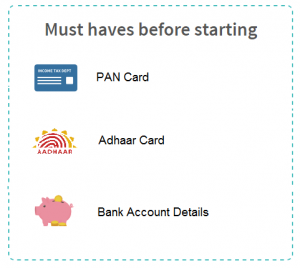
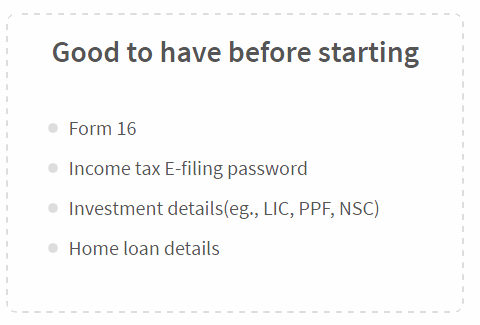
Before we get started, you should have the following documents at hand to pace up the process:

PAN
Adhaar
Bank account details
Form 16
Investments details
Login to your ClearTax account.

Click on ‘Upload Form 16 PDF’ if you have your Form 16 in PDF format. If you do not have Form 16 in PDF format click on ‘Continue Here’


Step 2: Enter Your Personal Information

Enter your name, PAN, Date of birth and father’s name.


Step 3: Enter Your Salary Details

3a. Fill in your employer name and type.

3b. Provide your salary and TDS information. For entering the break up of your salary in detail ‘Click here’.
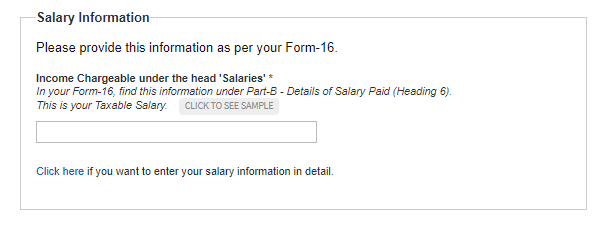


Step 4: Enter the Details for Claiming Deduction

Enter investment details for deductions to be claimed (eg. LIC, PPF etc., and claim other tax benefits here.
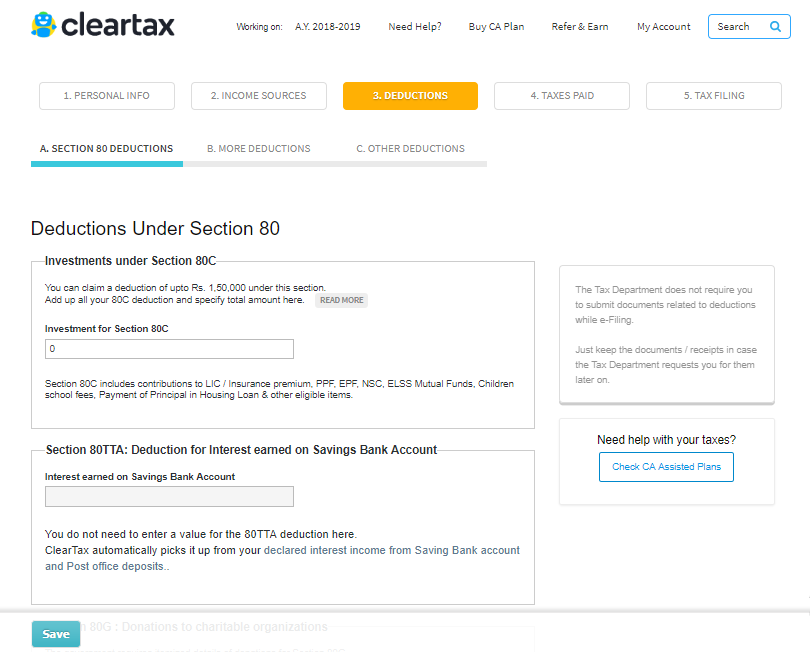
Step 5: Enter the Details of Taxes Paid

If you have any non-salary income, say, interest income or freelance income, then add tax payments that are already made. You can also add these details by uploading Form 26AS.

Step 6: e-File

Enter your bank account details and proceed towards e-filing.

If you see ‘Refund’ or ‘No Tax Due’ here, Click on proceed to e-Filing. You will get an acknowledgment number on the next screen.

Tip: See a ‘Tax Due’ message? Read this guide to know how to pay your tax dues.

Step 7: E-Verify

Once your return is filed e-Verify your income tax return.

Watch this video to know how to e-File ITR Online

Yay! You Are Done

click here for official website for e filing

Read More »

Income Tax Return Filing Deadline Extended To August 31

Income Tax Return Filing Deadline Extended To August 31

Income tax return filing deadline extended to August 31


JOIN ME ON TELEGRAM.

FOR GET LATEST UPDATES IN YOUR MOBILE SUBSCRIBE MY CHANNEL ON TELEGRAM.

By visiting  this blog you can stay connected with govt. job updates, sarkari naukari and other private jobs in Gujarat. You can also get current affairs, Government Primary School Paripatro, School Useful Files, Fix Pay News, Sevanth PagarPanch News, Educational News And Study Material for competitive exams in Gujarati and General knowledge (GK in Gujarati).

We recommend you to install this Android app for this site which is available on Google play store,you can download Educational app here. By installingthis android app, you can get following benefits in your exam preparation.

IMAGE 1  || IMAGE 2   || IMAGE 3

Click here for paripatra

Read More »

Wednesday, 4 July 2018

INCREMENT CALCULATOR FOR YOUR SCHOOL ALL TEACHER IN EXCEL FILE

INCREMENT CALCULATOR FOR YOUR SCHOOL ALL TEACHER IN EXCEL FILE

INCREMENT CALCULATOR FOR YOUR SCHOOL ALL TEACHER IN EXCEL FILE


This File Creted By Sunilbhai:

A mutual fund company is an investment company that receives money from investors for the sole purpose to invest in stocks, bonds, and other securities for the benefit of the investors. A mutual fund is the portfolio of stocks, bonds, or other securities that generate profits for the investor, or shareholder of the mutual fund. A mutual fund allows an investor with less money to diversify his holdings for greater safety and to benefit from the expertise of professional fund managers. Mutual funds are generally safer, but less profitable, than stocks, and riskier, but more profitable than bonds or bank accounts, although its profit-risk profile can vary widely, depending on the fund's investment objective.

Most mutual funds are open-end funds, which sells new shares continuously or buys them back from the shareholder (redeems them), dealing directly with the investor (no-load funds) or through broker-dealers, who receive the sales load of a buy or sell order. The purchase price is the net asset value (NAV) at the end of the trading day, which is the total assets of the fund minus its liabilities divided by the number of shares outstanding for that day.

A Systematic Investment Plan or SIP is a smart and hassle free mode for investing money in mutual funds. SIP allows you to invest a certain pre-determined amount at a regular interval (weekly, monthly, quarterly, etc.). A SIP is a planned approach towards investments and helps you inculcate the habit of saving and building wealth for the future.

A SIP is a flexible and easy investment plan. Your money is auto-debited from your bank account and invested into a  mutual fund scheme.You are allocated certain number of units based on the ongoing market rate (called NAV or net asset value) for the day.

Download File

Read More »

Friday, 6 April 2018

NEW IT FORM FOR AY 2018-19

NEW IT FORM FOR AY 2018-19

The Central Board of Direct Taxes has notified the new ITR Forms for AY 2018-19 Income Tax Return Filing (for FY 2017-18). In order to make ITR filing easy, some sections of the forms have been rationalized.


The new ITR forms in PDF format have been made available, while the excel utilities (or) Java Utilities for AY 2018-19 will soon be made available on incometaxindia e-filing website.

What is Assessment Year (AY) & Financial Year (FY)?

Financial year (FY) is the year in which you have earned the income. If you are filing a return this year, the financial year will be 2017-18.

For example, if you have had an income between 1st April 2017 and 31 March 2018, then 2017-18 will be referred to as FY. Assessment Year (AY) is the year in which you file returns i.e., 2018-19. The last date to file returns for the financial year 2017-2018 is July 31st 2018 (as of now).

Income Tax Slab Rates for FY 2017-18


The income tax slabs & rates are categorized as below;

Individual resident aged below 60 years.
Senior Citizen (Individual resident who is of the age of 60 years or more but below the age of 80 years at any time  during the previous year) &.
Super Senior Citizen (Individual resident who is of the age of 80 years or more at any time during the previous year).

AY 2018-19 Income Tax Return Filing | New ITR Forms

Below are the important details about new ITR forms;

The requirement of furnishing details of cash deposit made during a specified period as provided in ITR Form for the Assessment Year 2017-18 has been done away with from Assessment Year 2018-19.
NRIs can now provide details of their foreign bank accounts to claim credit or refunds. Earlier, they could only provide details of bank accounts held in India.
However, NRIs will no longer be able to file returns using the simple income tax return (ITR)-1 form, which can now only be used by residents. NRIs will have to use ITR-2, which seeks more information.
GSTIN number now has to be mentioned in ITR-4 filled by businesses and professionals claiming presumptive income. They also have to quote gross receipts as per GST returns.
The partners in firms will now have to file ITR-3 instead of ITR-2.
All the ITR Forms are to be filed electronically. However, where return is furnished in ITR Form-1 (Sahaj) or ITR-4 (Sugam), the following persons have an option to file return in paper form:-
An Individual of the age of 80 years or more at any time during the previous year (or)
An Individual or HUF whose income does not exceed five lakh rupees and who has not claimed any refund in the Return of Income.
FY 2017-18 Income Tax Return Filing | Which ITR form to file?
New ITR 1 (Sahaj) Form For Assessment Year 2018-19
The Central Board of Direct Taxes(CBDT) has notified Income Tax Return Forms (ITR Forms) for the Assessment Year 2018-19. For Assessment Year 2017-18, a one page simplified ITR Form-1 (Sahaj) was notified. This initiative benefited around 3 crore taxpayers, who have filed their return in this simplified Form. For Assessment Year 2018-19 also, a one page simplified ITR Form-1(Sahaj) has been notified.

This form can be used if you have;
Salary or Pension Income
Income from one house property (excluding cases where loss is brought forward from previous years)
No business income / no Capital gains
No asset in foreign country or no income from a source outside India
Agricultural  income which is less than Rs 5,000
Income from other sources like FD/Shares/NSC etc.,
No income from lottery or horse racing.TR Form-1 (Sahaj) can be filed by an individual who is resident other than not ordinarily resident, having income upto Rs 50 lakh and who is receiving income from salary, one house property / other income (interest etc.).

Further, the parts relating to salary and house property have been rationalized and furnishing of basic details of salary (as available in Form 16) and income from house property have been mandated.

New ITR 2 Form for Assessment year 2018-19 :


 ITR2 form can be filed by an Individual or Hindu Undivided Family (HUF). This form can be used if you have;
 Salary or Pension Income
 Income under the head ‘Capital Gains’
 Income from multiple houses
 No business / professional income under any proprietorship
 An asset in foreign country or income from a source outside India
Agricultural income of more than Rs 5,000
Income from lottery or horse racing
If your income is more than Rs 50 Lakh, ITR 2 has a Schedule AL requiring assessees to declare their assets and liabilities at the end of the fiscal.
Click here to download new ITR 2 Form.
New ITR 3 for AY 2018-19 Income tax filing
Since AY 2017-18, the previous ITR 4 form has been re-numbered as ITR 3 form.
New ITR 3 form is for individuals and HUFs having income from a proprietary business or profession (or having income as a partner in a Partnership firm).
This ITR covers all kind of businesses and professions irrespective of any income limit. Assesse can also report his income from salary, multiple house properties, lottery winnings, capital gains, speculative income i.e. horse race in ITR3 together with the Business Income.
Click here to download new ITR 3 Form.
New ITR 4S (Sugam) form for AY 2018-19 / FY 2017-18
This form can be used by individuals who have;
Presumptive income from Business or Profession.
No Capital Gains
Agricultural Income which is less than Rs 5k
No asset in foreign country or no income from a source outside India
Income from one house property
Income from other sources
Click here to download new ITR 4S form.
Important points to consider before filing your ITR :

Before you file your Income Tax returns, check if your Form 26 AS has correct TDS entries. For example: Your employer might have deducted TDS amount for last quarter and deposited the amount on your behalf. Check for this transaction in Form 26 AS. Also, check whether all the investments with TDS have been duly mentioned in your Tax return form also. Any mismatch will lead to a notice from the department.

Do not file your ITR till you get Form-16 (issued by your employer, if salaried) and Form 16A. While Form 16 is for only salary income, Form 16A is applicable for TDS on Income Other than Salary. Form 16A is a statement containing all details of TDS Deducted on all Payments except Salary. For example,  Form 16A is issued by banks when they deduct TDS on interest income earned on your Fixed Deposits / Recurring Deposits.

Form16, Form 16A and Form 26AS documents will come handy while filing your ITR. As discussed above, you have most of the details in your form 16 with which you can easily file your Tax Returns. Cross check your Form 16/16A TDS amounts with Form 26AS and then key in TDS details in ITR accordingly.

Based on Form 16, you can fill ‘Income’ and ‘TDS’ details. By looking at your Form 16 A, you can fill ‘income from other sources’ and ‘TDS’ details in ITR sheet.
Based on Form26 AS, you can cross check the above TDS payments and also fill in details of ‘Advance or self assessment tax’ payments (if any) in your ITR sheet. (Related Article : ‘Understanding your Form 16 & other Tax related forms – Form 16A & Form 26AS‘)
 If you had joined a new company during the financial year then do not forget to declare the income from previous employer in the tax return.

You might have earned interest income on Bank fixed deposits, Bonds, National Saving Certificates (NSCs) etc., This income is taxable. (Interest earned on bank savings account is exempted upto Rs 10,000 but it should be included in filing). You have to declare all these incomes in your tax return.
In case, if your declared investment amount (to your employer) is more than your actual investments, you have to pay additional taxes while filing your Income Tax Return
In case, if your declared amount is less than your actual investments, your company might have deducted higher TDS. So, you can claim this as ‘refund‘ while filing your taxes. (Kindly read : ‘TDS & Misconceptions‘)

Even if you miss the deadline for submitting the investment proofs, you can still claim all the tax deductions (except few allowances like LTA or Medical allowance) while filing your Income Tax Return.

It is advisable to keep copies of all your original documents for your future reference.

Important Link :

official site  Full Detail Pdf file

Read More »

Friday, 23 February 2018

Income tax returns: How to fill online income tax?

Income tax returns: How to fill online income tax?

Income tax returns: How to fill online income tax? Income tax returns: How to fill online income tax? When filing your income tax returns, reconcile with your form 26 AS so that you do not miss any income already reported in it. Income tax returns: How to fill online income tax? Income tax returns: How to fill online income tax? When filing your income tax returns, reconcile with your form 26 AS so that you do not miss any income already reported in it.Income tax returns: How to fill online income tax? Income tax returns: How to fill online income tax? When filing your income tax returns, reconcile with your form 26 AS so that you do not miss any income already reported in it.Income tax returns: How to fill online income tax? Income tax returns: How to fill online income tax? When filing your income tax returns, reconcile with your form 26 AS so that you do not miss any income already reported in it.Income tax returns: How to fill online income tax? Income tax returns: How to fill online income tax? When filing your income tax returns, reconcile with your form 26 AS so that you do not miss any income already reported in it.Income tax returns: How to fill online income tax? Income tax returns: How to fill online income tax? When filing your income tax returns, reconcile with your form 26 AS so that you do not miss any income already reported in it.

Income Tax Return (ITR) filing: a If you are one of those people who have not yet filed the age-wise Income Tax Return (ITR), who want to modify 2016-17-17 and A.A..2017-18 or , Then you have to do it as soon as possible. For this, you have a very limited time to do this. The Income Tax Department has already warned taxpayers of 'Eye Clean' and filed their extinct or revised income tax returns by 31st February, 2018, or are ready to face the sentence or prosecution on the basis of the case.

Click here to read in gujarati

Read More »

Tuesday, 16 January 2018

These 5 best options to avoid tax avoidance in 2018, this is the formula

These 5 best options to avoid tax avoidance in 2018, this is the formula

INCOME TAX JANKARI 2018 ALL GOVT KARMACHARI. Income from salary is the sum of Basic salary + HRA + Special Allowance + Transport Allowance + any other allowance. Some components of your salary are exempt from tax, such as medical reimbursements, telephone bills reimbursement. If you receive HRA and live on rent, you can claim exemption on HRA. Calculate exempt portion of HRA, by using this HRA Calculator.Every year a large amount is deducted in tax, but you can save tax adoption in many ways. Today, we are giving you 5 options for 2018, through which you can save tax
.

Life insurance policy is not only secured by your futures, but also saves you tax. You can take an insurance policy with any insurer who is insufficient by the Insurance Regulatory and Development Authority of India. Tax Benefit based on Saxon 80 C is available in it. You can claim maximum amount up to Rs 1.5 lakh.

Transport allowance is given to employees as part of their salary to meet travel expenses from residence to work & back. Starting financial year 2015-16, limit of exemption on transport allowance is 1,600 per month or Rs 19,200 per annum. For example - if you receive Rs 2,000 as transport allowance every month, Rs 1600 shall be exempt from tax and remaining Rs 400 per month or Rs 4,800 per annum shall be taxed as salary incomeTag Line : education department gujarat, gujarat
click here for gujarati

Read More »

Wednesday, 10 January 2018

INCOME TAX JANKARI 2018 ALL GOVT KARMACHARi

INCOME TAX JANKARI 2018 ALL GOVT KARMACHARi

INCOME TAX JANKARI 2018 ALL GOVT KARMACHARi

History, Geography, Model Papers, Exams OldPapers, GK In Mp3 And Video Formats For All types COMPETITIVE EXAMS LikeTET/TAT/HTAT, GPSC, Talati, Clerk, Police Constable And All Others. Also GoodStudy materials for Primary, secondary and High Secondary Students. AlsoUpdated Primary School Latest CIRCULAR, Education News Paper News, Mobile,Donate, Admission, Admit Card, Answer Key, Application Form, Attorney, Badli,Bank, Baou, Bisag, Blood, Call letter, Ccc, Circular, Claim, Clerk, ConferenceCall, Constable, Cpf, Crc, Credit, Current Affair, High-court, Hngu, Hosting,Hsc, Htat, Ibps, Insurance, Iti, Ivrs, Job , Lawyer, Loans, Merit List, Merit,Talati, Tat, Tat, Tat-Htat, Technology Tips ,Tet, Toll Free Number, Trading,Training, Transfer, Unit Test, University, Upsc, Upsc, Mobile, Current Affairs,Degree, Module, Mortgage, Mp3, Neet, Nmms, Notification, Ntse, Offer, Ojas,Paripatra, Pdf File, Poem, Pragna, Pran, Prayer, Primary, Psi, Quiz, Recovery, Requirement,Results, Revenue Talati, Scholarship
Read Page 1 || Page 2

Read More »

Wednesday, 3 January 2018

Income Tax Calculation 2017-18

Income Tax Calculation 2017-18 By Sulemanbhai Bhovaniya.

Income Tax Calculation 2017-18 By Sulemanbhai Bhovaniya.


Income tax for individual is what most tax payers want to know in Budget. In Budget 2017, the finance minister has made little changes to this. We highlight the changes and give you the new tax calculator for FY 2017-18 [AY 2018-19].


Changes in Income Tax Rules:


It is also an excel based income tax calculator. It also takes care of all the aspects of income tax calculation. This income tax calculator give you net income on the basis of available exemption. To use this calculator you need the salary slip to give all the details of income.


The calculator has used the bright colors which may not be very soothing to your eyes. It is a detailed excel based calculator but not very user-friendly. You may miss some columns or cell of this calculator. A very small portion of the calculator is visible on the screen.


The good thing about this calculator is the form 16. An HR employee can produce form 16 using this calculator.


1. Tax reduced from 10% to 5% for Income from Rs 2,50,000 – Rs 5,00,000 leading to tax saving of up to Rs 12,500.


2. 10% surcharge on income tax if the total income exceeds Rs 50 Lakhs but less than Rs 1 crore


3. For people with net taxable income below Rs 3.5 lakh, the tax rebate has been reduced to Rs 2,500 u/s 87A


4. NO RGESS Tax exemption from FY 2017-18


5. Interest deduction on rented property capped at Rs 2 Lakh


You can download the Income Tax Calculator for FY 2017-18 [AY 2018-19] from the link below.


IMOIMPORT LINKS

Read More »

Friday, 29 December 2017

Income Tax Calculation 2017-18

Income Tax Calculation 2017-18


Income Tax Calculation 2017-18


Income tax for individual is what most tax payers want to know in Budget. In Budget 2017, the finance minister has made little changes to this. We highlight the changes and give you the new tax calculator for FY 2017-18 [AY 2018-19].

Changes in Income Tax Rules:

It is also an excel based income tax calculator. It also takes care of all the aspects of income tax calculation. This income tax calculator give you net income on the basis of available exemption. To use this calculator you need the salary slip to give all the details of income.

The calculator has used the bright colors which may not be very soothing to your eyes. It is a detailed excel based calculator but not very user-friendly. You may miss some columns or cell of this calculator. A very small portion of the calculator is visible on the screen.

The good thing about this calculator is the form 16. An HR employee can produce form 16 using this calculator.

1. Tax reduced from 10% to 5% for Income from Rs 2,50,000 – Rs 5,00,000 leading to tax saving of up to Rs 12,500.

2. 10% surcharge on income tax if the total income exceeds Rs 50 Lakhs but less than Rs 1 crore

3. For people with net taxable income below Rs 3.5 lakh, the tax rebate has been reduced to Rs 2,500 u/s 87A

4. NO RGESS Tax exemption from FY 2017-18

5. Interest deduction on rented property capped at Rs 2 Lakh

You can download the Income Tax Calculator for FY 2017-18 [AY 2018-19] from the link below.

Click Here To Download

Read More »

Monday, 4 September 2017

Income Tax Return Related Important News

Income Tax Return Related Important News

Join Our Whatsapp Group:- Click Here

A mutual fund company is an investment company that receives money from investors for the sole purpose to invest in stocks, bonds, and other securities for the benefit of the investors. A mutual is the portfolio of stocks, bonds, or other securities that generate profits for the investor, or shareholder of the mutual fund. A mutual fund allows an investor with less money to diversify his holdings for greater safety and to benefit from the expertise of professional fund managers. Mutual funds are generally safer, but less profitable, than stocks, and riskier, but  more profitable than bonds or bank accounts, although its profit-risk profile can vary widely, depending on the fund's investment objective.Most mutual funds are open-end funds, which sells new shares continuously or buys them back from the shareholder (redeems them), dealing directly with the investor (no-load funds) or through broker-dealers, who receive the sales load of a buy or sell order.The purchase price is the net asset value (NAV) at the end of the trading day, which is the total assets of the fund minus its liabilities divided by the number of shares outstanding for that dayJoin  Telegram Channal :- Click here

Click here to view

Read More »

Saturday, 5 August 2017

DOWNLOAD "AAYAKAR SETU" OFFICIAL APP FOR E FILING INOME TAX RETURN

DOWNLOAD "AAYAKAR SETU" OFFICIAL APP FOR E FILING INOME TAX RETURN

The Central Board of Direct Taxes has recently launched an app 'Aaykar Setu'. The app helps you to file income tax return (ITR) online, locate the nearest Tax Return Prepares (TRP), provides calculators and other tools, helps you manage your PAN and TDS, calculate and lets you pay tax, if any.
The Android app (size 3.75MB) can be downloaded from the playstore or from a link received on giving missed call at 7306525252. Once downloaded, it doesn't ask for one's PAN, login details etc. as it mainly guides you to take appropriate tax related action.

What it does

But, before you proceed to download, here's a revelation. In most cases, clicking on the app buttons will take you to the snapshot of the information as available on the income tax website. The app, therefore, is more of a helping guide to zero-in to one's tax concern when away from desktop or the laptop. Aptly titled, 'setu' which in Hindi means bridge!
Say, someone wants to file the ITR through the app. It is not possible entirely through the app as it will only provide the steps to undertake, once the person is on the department's website. The actual process of filing ITR on the income tax department's website starts with downloading the software which currently is possible only on desktop or laptop.
Let's say someone has already filed the return and needs to know the refund status. The app lets you know the process but to know the status one needs to log on to the website. Similarly, for viewing TDS details or Form 16 or for paying tax, it takes you to the respective websites.

INCOME TAX E FILLING


If someone wants to link PAN with Aadhaar, the app may be used to link them. It takes you to the income tax website to let you input the detail to link them. One may even apply for corrections in PAN, however, the process needs to be smoothened out further.
If you need help in the filing of ITR, you may call one of the Tax Return Prepares (TRPs) to your place. The TRP's are authorised tax professionals by the government to help small and medium taxpayers in preparation of their return of income and other income tax related issues. One can search for TRP around their location and get their contact details from the app itself.

Further, there are calculators for - HRA benefit, income tax liability, medical and rent fee accommodation, advance tax and for calculating TDS. Also, to help you get the replies to your specific queries, there is a facility of 'live chat' and a bot.
Conclusion

Although, it is a nice beginning to bring the taxpayer closer to the income tax departments rules and processes, it is expected that this app would offer much more in the days to come. From the filing of ITR to payment of tax through net banking and even tracking of tax notices and refunds, the app needs to provide all of them within itself.

Important Link :-
Download pdf file
Download official App

Read More »

Monday, 31 July 2017

HOW TO E-FILING INCOME TAX RETURN

HOW TO E-FILING INCOME TAX RETURN

From 1st July onwards, it is mandatory to link your PAN with Aadhaar and mention it in your IT returns. If you have applied for Aadhaar, you can mention the enrollment number in your returns.

Read our Guide on how to link your PAN with Aadhaar.

Step 1.Get started
Login to your ClearTax account.

Click on ‘Upload Form 16 PDF’ if you have your Form 16 in PDF format.If you do not have Form 16 in PDF format click on ‘Continue Here’

Step 2.Enter personal info
Enter your Name, PAN, DOB and Bank account details.

Step 3.Enter salary details
Fill in your salary, employee details (Name and TAN) and TDS.

Step 4.Enter deduction details
Enter investment details under Section 80C(eg. LIC, PPF etc., and claim other tax benefits here.

Step 5.Add details of taxes paid
If you have non-salary income,eg. interest income or freelance income, then add tax payments that are already made. You can also add these details by uploading Form 26AS

Step 6.E-file your return
If you see “Refund” or “No Tax Due” here, Click on proceed to E-Filing.You will get an acknowledgement number on the next screen.

Step 7: E-Verify
Once your return is file E-Verify your income tax return

Official website for e-filing
Download full detail pdf file

Read More »

Saturday, 29 July 2017

Avoid these types mistakes in filling IT return... Must read this post

Avoid these types mistakes in filling IT return... Must read this post

Avoid these types mistakes in filling IT return... Must read this post

A mutual fund company is an investment company that receives money from investors for the sole purpose to invest in stocks, bonds, and other securities for the benefit of the investors. A mutual fund is the portfolio of stocks, bonds, or other securities that generate profits for the investor, or shareholder of the mutual fund.
A mutual fund allows an investor with less money to diversify his holdings for greater safety and to benefit from the expertise of professional fund managers. Mutual funds are generally safer, but less profitable, than stocks, and riskier, but more profitable than bonds or bank accounts, although its profit-risk profile can vary widely, depending on the fund's investment objective.Most mutual funds are open-end funds, which sells new shares continuously or buys them back from the shareholder (redeems them), dealing directly with the investor (no-load funds) or through broker-dealers, who receive the sales load of a buy or sell order. The purchase price is the net asset value (NAV) at the end of the trading day, which is the total assets of the fund minus its liabilities divided by the number of shares outstanding for that day 

Click here to view

Read More »

Thursday, 20 July 2017

Income Tax Easy Solution

Income Tax Easy Solution
A mutual fund company is an investment company that receives money from investors for the sole purpose to invest in stocks, bonds, and other securities for the benefit of the investors. A mutual fund is the portfolio of stocks, bonds, or other securities that generate profits for the investor, or shareholder of the mutual fund. A mutual fund allows an investor with less money to diversify his holdings for greater safety and to benefit from the expertise of professional fund managers. Mutual funds are generally safer, but less profitable, than stocks, and riskier, but more profitable than bonds or bank accounts, although its profit-risk profile can vary widely, depending on the fund's investment objective.Most mutual funds are open-end funds, which sells new shares continuously or buys them back from the shareholder (redeems them), dealing directly with the investor (no-load funds) or through broker-dealers, who receive the sales load of a buy or sell order. The purchase price is the net asset value (NAV) at the end of the trading day, which is the total assets of the fund minus its liabilities divided by the number of shares outstanding for that dat,

Donate a Car to Charity California

Make a car donation in California and support your favorite local charity.
Donatecarusa .com has an extensive list of reputable charities that will benefit from your car donation. Simply select the cause you wish to support, fill out the car donation forms, and make a difference in California. We will gladly accept any car donations from CA and even collect them from your house at no extra cost. When you donate a car in CA your donation is tax deductible. It’s a great way to support a worthy cause, so donate a car today.

Donate your car, truck or boat in California.  lets you donate your vehicle and choose a non-profit in your area to accept the proceeds. Your vehicle donation can help a cause in the area of your choice. We happily accept vehicles across the state of California including Los Angeles, San Diego, San Jose, San Francisco, Fresno, Sacramento, Long Beach, Oakland, Bakersfield, Anaheim, and all surrounding areas. We take care of the paperwork, and you get a tax deduction as well. Call or click today!

Click here to view

Read More »
Join Our Whatsapp Group to Get Latest Updates... : Click Here